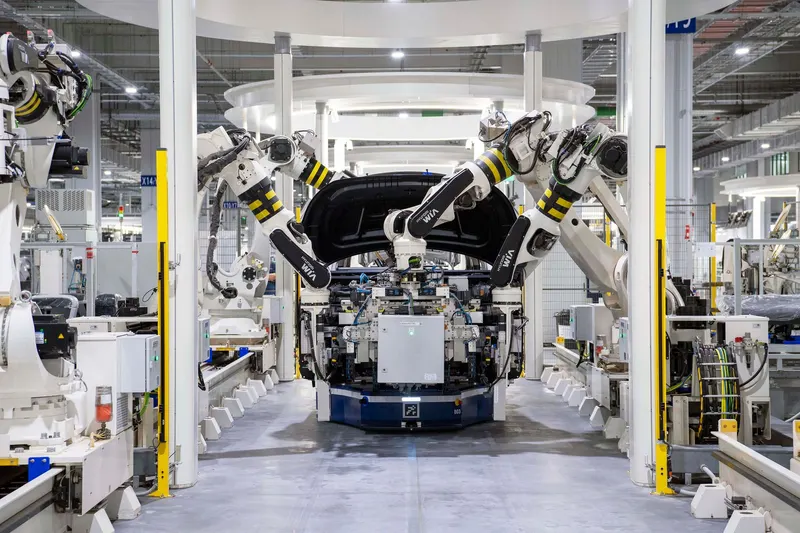
Robotics: From Automatic Machines to Programmable Systems
Robotics combined centuries of automatons, control theory and digital electronics to produce industrial, mobile and exploration robots whose limits remain significant.

Automating means handing a task to a system that carries it out with little human intervention. The articles in this area cover robotics and the milestones of computational intelligence, with attention to achievements, failures, limits, and debates that remain open.

Robotics combined centuries of automatons, control theory and digital electronics to produce industrial, mobile and exploration robots whose limits remain significant.

Computational intelligence is a research field more than seventy years old, marked by cycles of enthusiasm and reassessment, rival methods and debates that remain open.
Researchers gathered at Dartmouth popularize the term "artificial intelligence." Alan Turing had already published a paper on thinking machines in 1950.
Read: Computational intelligence →A Unimate robot is installed at a General Motors plant in the United States.
Read: Robotics →IBM's Deep Blue computer wins a six-game match against world chess champion Garry Kasparov.
Read: Computational intelligence →A deep neural network wins the ImageNet challenge by a wide margin and boosts interest in such methods.
Read: Computational intelligence →Researchers present the Transformer architecture, the basis of many later language models.
Read: Computational intelligence →