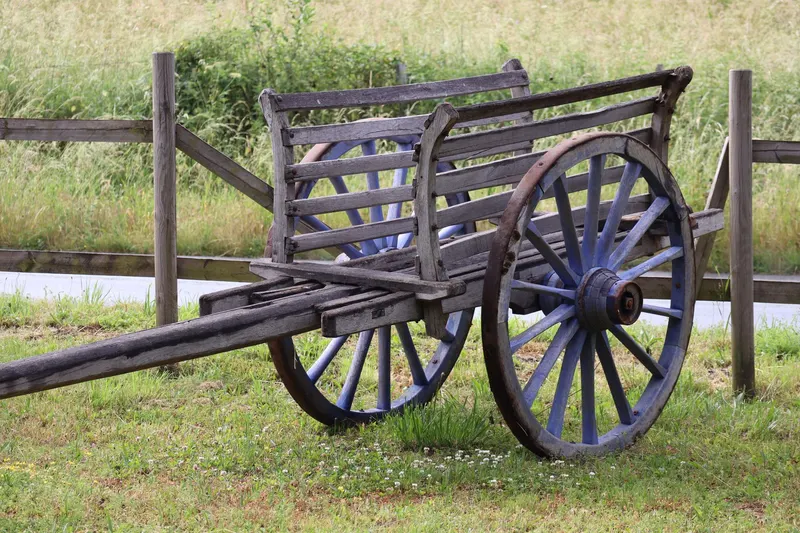
The Wheel and the Evolution of Rotating Mechanisms
The vehicle wheel appeared in the fourth millennium BCE, with its origin debated. Axles, spokes, mills, and gears grew from it and prepared the ground for steam and factories.

Moving people and cargo requires mechanisms, roads, and methods of orientation. This area deals with the wheel and rotating mechanisms and with the instruments that helped navigators find their position at sea and on land, connecting regions and changing trade routes.

The vehicle wheel appeared in the fourth millennium BCE, with its origin debated. Axles, spokes, mills, and gears grew from it and prepared the ground for steam and factories.

From Polynesian wayfinding to the astrolabe, the compass and Harrison's chronometer, navigation combined observation, instruments and charts to cut risk at sea.
Finds and depictions point to wheels on vehicles in Mesopotamia and Europe around this time. The exact origin is disputed.
Read: The wheel →Chinese records from the eleventh century and European ones from the twelfth and thirteenth describe the magnetic needle used for orientation.
Read: Navigation →John Harrison's H4 watch is tested on a sea voyage as a way to determine longitude at sea.
Read: Navigation →