Communication
Writing as a Technology of Record-Keeping and Administration
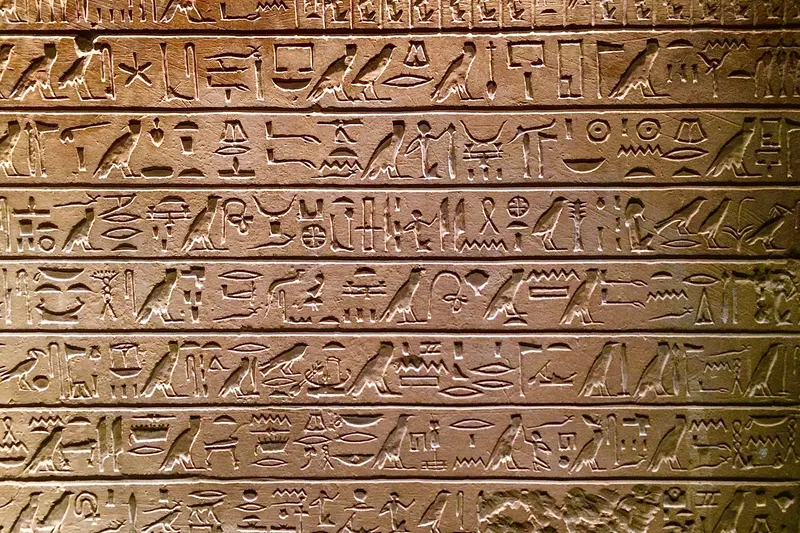
Writing arose independently in more than one region, often tied to administration. See its materials, scribes, the alphabet, and the limits of ancient literacy.
Recording and transmitting information has always required media, codes, and channels. This area traces the path from writing to the mobile phone, through paper, printing, electrical signals, and radio waves, and shows how each stage shortened the time and distance between sender and receiver.
Writing arose independently in more than one region, often tied to administration. See its materials, scribes, the alphabet, and the limits of ancient literacy.

Paper emerged in China and spread across Asia, the Islamic world and Europe, cutting the cost of writing and preparing the ground for printing.
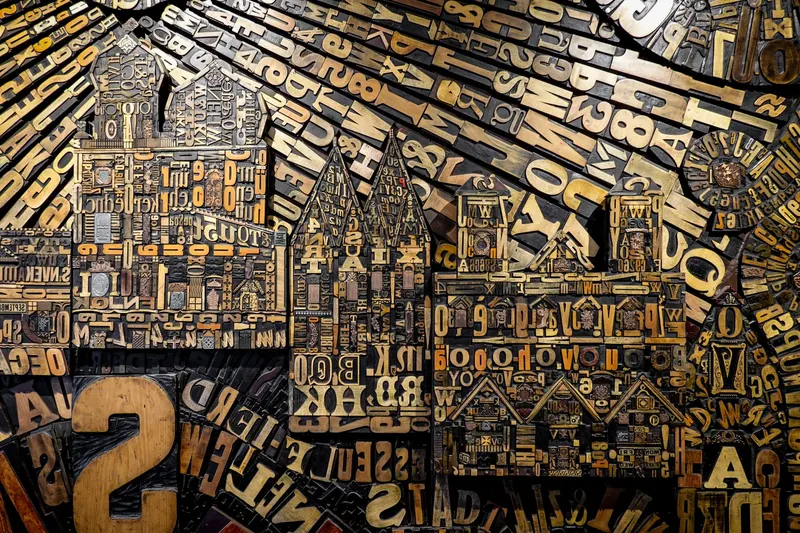
Movable type had Asian antecedents; in Mainz, Gutenberg's workshop combined a type mold, alloy, ink and press into a system for producing books.

Developed by many inventors in the 1830s and 1840s, the electric telegraph made information travel faster than trains and ships and reshaped railways, the press, and markets.
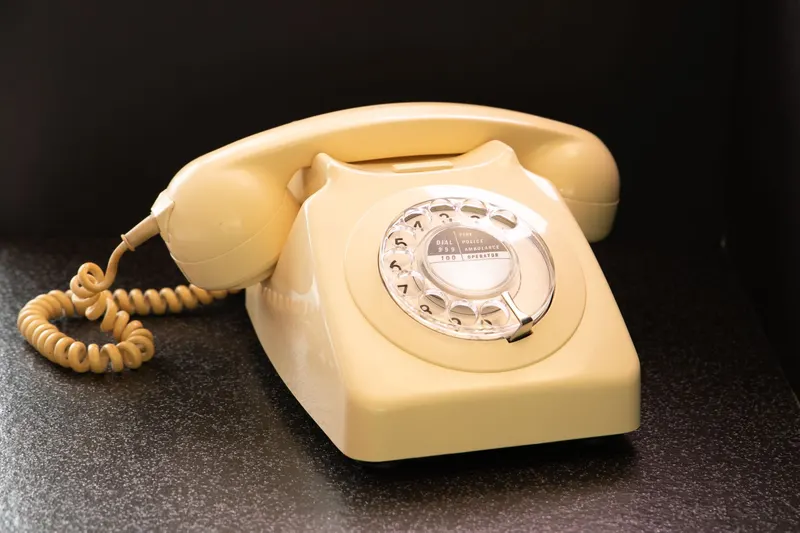
The telephone grew out of collective and contested research on sending the voice over wires, and evolved from manual switchboards to global digital networks.

How the theory of electromagnetic waves became ship-to-shore wireless telegraphy and then broadcasting, with patent disputes, the vacuum tube, FM, and spectrum regulation.
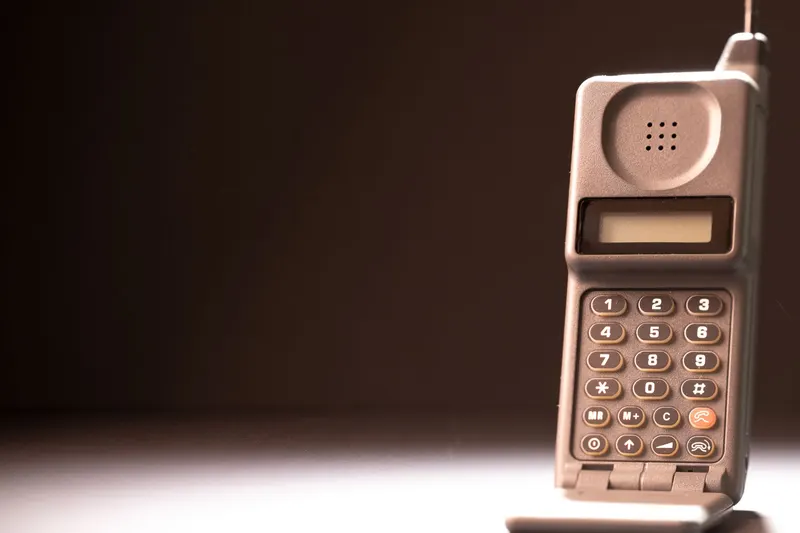
The mobile phone grew from three ideas: divide territory into cells, reuse frequencies, and shrink the handset, a path that ran from car radios to smartphones.
Accounting tablets with numerical and pictographic signs appear in Mesopotamian cities. Other regions developed writing systems of their own.
Read: Writing →Archaeological fragments indicate paper before the improvement that tradition credits to Cai Lun, around 105 CE.
Read: Paper →The Jikji is the oldest known surviving book printed with movable metal type.
Read: Printing press →Johannes Gutenberg and collaborators develop a system of movable metal type, press, and ink suited to Europe. The 42-line Bible dates to about 1455.
Read: Printing press →Cooke and Wheatstone in Britain and Morse and Vail in the United States develop systems. The Washington–Baltimore line is demonstrated in 1844.
Read: Telegraph →After the 1858 attempt failed within weeks, the 1866 cable establishes stable telegraph communication between North America and Europe.
Read: Telegraph →Alexander Graham Bell obtains a patent in the United States. Priority disputes involving Elisha Gray and Antonio Meucci remain debated.
Read: Telephone →Guglielmo Marconi announces reception of a signal between England and Newfoundland. The technical proof of the feat is debated.
Read: Radio →Station KDKA in Pittsburgh begins regular broadcasts in November 1920.
Read: Radio →Martin Cooper of Motorola places a call in April 1973 using a prototype portable cellular phone.
Read: Mobile phones →The iPhone is unveiled in January 2007 and Android reaches the market in 2008. Phones with Web access and apps become popular.
Read: Mobile phones →