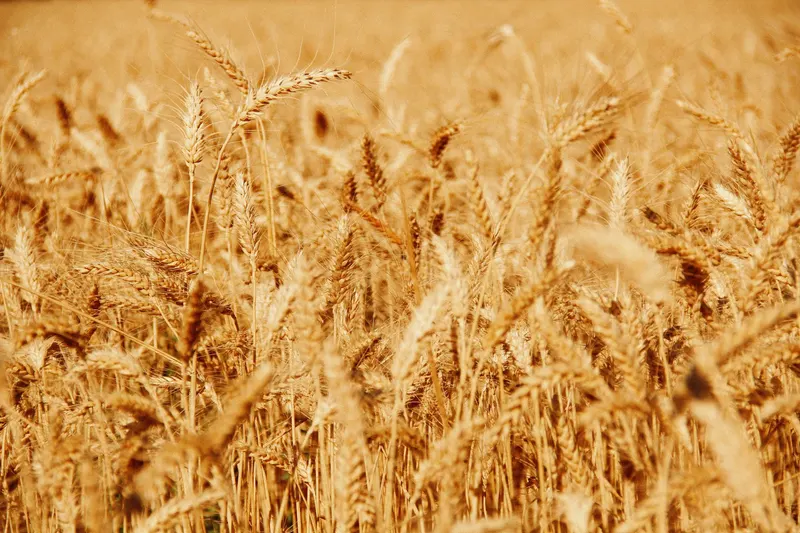
For most of human history, food came from gathering, hunting, and fishing, and groups moved with the seasons. The system worked, but it had limits. Food that was not eaten soon spoiled, carrying stores was heavy, and a poor season of rain or game could mean hunger. The domestication of plants and animals, combined with ways of keeping food, gave some societies a more predictable base. It was neither sudden nor the same everywhere.
How it began: a slow process
The phrase "Neolithic Revolution," popularized by the archaeologist V. Gordon Childe in the twentieth century, suggests a quick leap. Later research shows something different. In several places, hunter-gatherers managed wild plants for thousands of years before dependence on crops took hold. At Ohalo II, on the shore of the Sea of Galilee, for example, there is evidence that wild grains were gathered and ground around 23,000 years ago, long before any systematic planting. The excavators also argued that weedy plants found there point to a small, early attempt at cultivation, an interpretation that remains debated. Storage, too, can come first: at Dhra' in Jordan, raised granaries with suspended floors have been dated to about 11,300 years ago, before fully domesticated cereals appear.
Domestication means changing a species, through prolonged human selection, to make it more useful. In a cereal, that includes ears that do not shatter on their own when ripe, which makes harvesting easier, and larger grains. In animals it includes calmer temperament and changes in body size. These traits show up gradually in the archaeological record, usually over centuries or millennia.
Independent origins in several regions
Current evidence indicates that agriculture arose independently in several places, based on different plants:
- Fertile Crescent (Near East): wheats, barley, lentils, and chickpeas, along with sheep, goats, pigs, and cattle, in gradual processes that began around 10,000 BCE and took millennia to complete.
- China: millet in the north and rice in the Yangtze valley, with signs of management and early cultivation from about 10,000 to 9,000 years ago (rice phytoliths at Shangshan, for example, are dated to about 9,400 years ago and show features suggesting domestication was under way). Dates are still being refined, and the full domestic forms appear later.
- Mesoamerica: maize, derived from the wild grass teosinte, along with squashes and beans, in what is now Mexico; the domestication process is estimated to span thousands of years.
- Andes: potatoes and quinoa among the plants, and llamas and alpacas among the animals.
- New Guinea: at Kuk, in the highlands, there is evidence of the management and drainage of wetland plots for cultivation, probably of taro, yam, and later bananas. The site is on the UNESCO World Heritage List, which describes wetland use going back about 7,000 years, with drainage ditches and cultivation around 6,500 years ago and possible activity as early as 10,000 years ago.
- Africa: sorghum, pearl millet, and other plants in the Sahel and savanna regions, together with cattle herding.
Not all societies adopted farming in the same way or at the same time, and many peoples combined cultivation with hunting, fishing, and gathering for long periods. Others kept ways of life based mainly on wild resources, by choice and as an adaptation to their environment, not out of backwardness.
Tools and techniques
Farming produced its own instruments, many of them descended from the stone tools described in The First Tools and the Transformation of Human Life.
- Sickles: flint or other stone blades set in handles of wood or bone. Repeated cutting of cereal stems leaves a characteristic gloss on the blades that archaeologists can identify under a microscope.
- Grindstones and querns: stones for crushing grain into flour, which removes hard husks and makes the food easier to digest.
- The simple plow (ard): a wooden implement, sometimes with a hardened tip, pulled by people or oxen, that scratches a furrow without turning the soil over. It lacked the moldboard of the heavy plow that came later.
- Irrigation and drainage: ditches, dikes, and canals to bring water to crops or carry it away. In southern Mesopotamia and the Nile valley, managing water required coordination among many households.
The use of animals for traction and carrying, such as oxen and, later, donkeys, expanded the area a family could work, and it leads to the subject of The Wheel and the Evolution of Rotating Mechanisms.
Storing the harvest: pits, pottery, and granaries
Cultivation matters only if the harvest can be kept until the next one and protected from damp, rodents, and insects. Solutions varied: lined baskets, underground pits and silos, raised granaries, clay jars, and large ceramic containers. Excavations at Near Eastern sites have recorded storage structures in very early villages, some of them before pottery was in general use and even before domesticated cereals, and differences in the size of stores are used to study how communities were organized.
Pottery, made of fired clay, supplied durable vessels for storing and cooking. It did not begin with farming, however. Very old pottery is known from East Asia, including Japan's Jomon period and sites in southern China such as Xianrendong Cave, where radiocarbon dates of about 20,000 to 19,000 years ago were reported in 2012. Pottery of roughly 16,000 years ago or more is also known from Japan. All of it was made by hunter-gatherers. The link between pottery and cultivation is therefore not automatic.
Surplus, accounting, and writing
Once food is in storage, people need to know how much there is, who owns it, and how much has been delivered. Many researchers point to this administrative pressure as one of the roots of accounting. The archaeologist Denise Schmandt-Besserat proposed that small clay tokens of various shapes, found at Near Eastern sites from about 8000 BCE onward, served as records of goods and eventually led to the first written signs. The hypothesis had a large influence and also drew criticism: not everyone accepts that the tokens form an unbroken chain to writing. The subject continues in Writing as a Technology of Record-Keeping and Administration.
Impact and limitations
The model of "linear progress," in which farming is simply an improvement, does not hold up well against the data. On one side, agriculture supported larger populations, permanent villages, and later cities, and it freed part of the population to specialize in crafts such as pottery, weaving, and metalworking. On the other, it came with costs:
- Health: skeletons of some early farmers show more dental decay, nutritional deficiencies, and in certain cases shorter stature than those of neighboring hunter-gatherers. Close living with animals and in large groups favored infectious disease, some of it originating in animals.
- Inequality: stores can be accumulated and inherited, and there are signs of differences in wealth and power in farming societies, although the degree varies greatly from case to case.
- Environment: deforestation, erosion, and, in irrigated regions with poor drainage, soil salinization. In southern Mesopotamia salinization is often cited as a long-term farming problem, though its severity and historical role are debated.
- Risk: reliance on a few species leaves a community vulnerable to pests and drought.
The better word is therefore "transformation," with gains and losses unevenly distributed, rather than "leap forward." What is found in one region cannot be projected automatically onto others.
Connections to other technologies
Farming freed labor time and created demand for new materials. The pottery kiln, for example, was a step in controlling high temperatures that metallurgy later exploited. Grindstones gave rise to milling mechanisms driven by water and wind, and the recording of deliveries and stocks was one of the earliest uses of writing.